Wood construction is no longer limited to single-family homes or small cabins. Today, developers are increasingly choosing CLT log and other solid wood solutions for multistorey buildings and larger area developments. This shift is driven by sustainability goals, construction efficiency, architectural quality, and long-term value.
This article explains what multistorey wood construction means, why wood is gaining ground in large-scale projects, and how Honka references demonstrate its potential in housing, hospitality, and area development.
Key Insights from This Article
- Wood construction is expanding from single-family homes into multistorey buildings, hotels, resorts, and large residential area projects.
- Modern CLT log and hybrid timber technologies make large-scale wood construction more technically scalable and architecturally flexible.
- Developers are increasingly choosing wood because of sustainability goals, healthy indoor environments, long-term durability, and distinctive design.
- Wood area projects can create a cohesive Scandinavian identity that strengthens the attractiveness and value of residential and hospitality developments.
- Honka’s international references demonstrate how modern timber construction can support urban development, tourism projects, and future rebuilding initiatives.
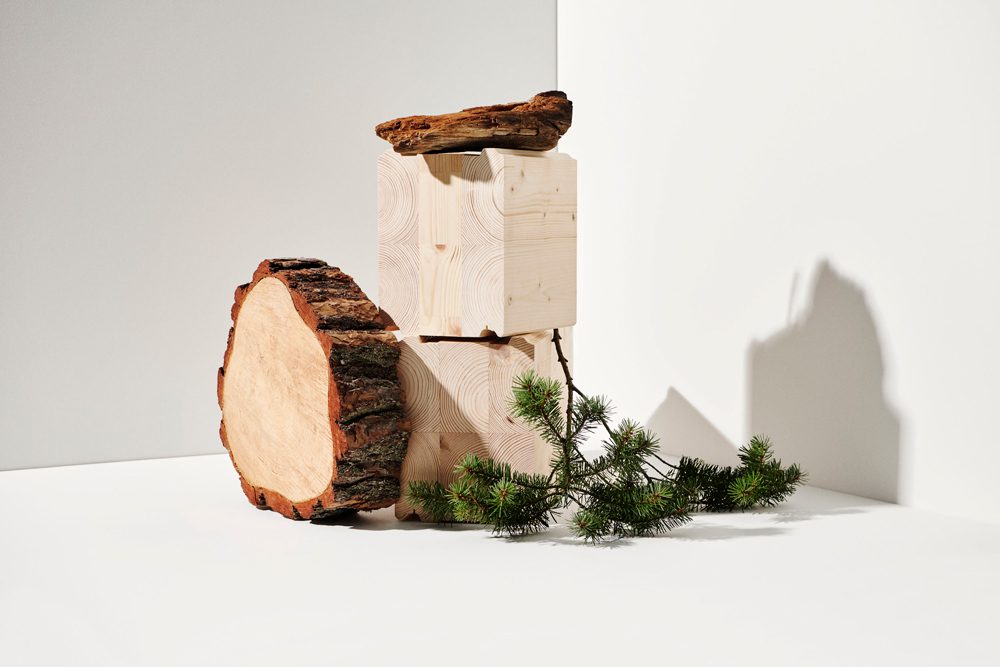
What is a multistorey building?
A multistorey building means a building with two or more floors above ground level, such as an apartment building, hotel, student residence, or mixed-use property. In wood construction, the term is increasingly linked to engineered timber and hybrid structures, where CLT log, concrete, or other materials can be combined for structural performance.
Honka’s Multistorey concept, for example, is designed for safe and long-lasting log apartment buildings, bringing the benefits of wood construction to larger residential projects.
How does wood fit into multistorey buildings?
Wood fits multistorey buildings by combining structural strength, fast construction, and a lower carbon footprint compared to many traditional materials.
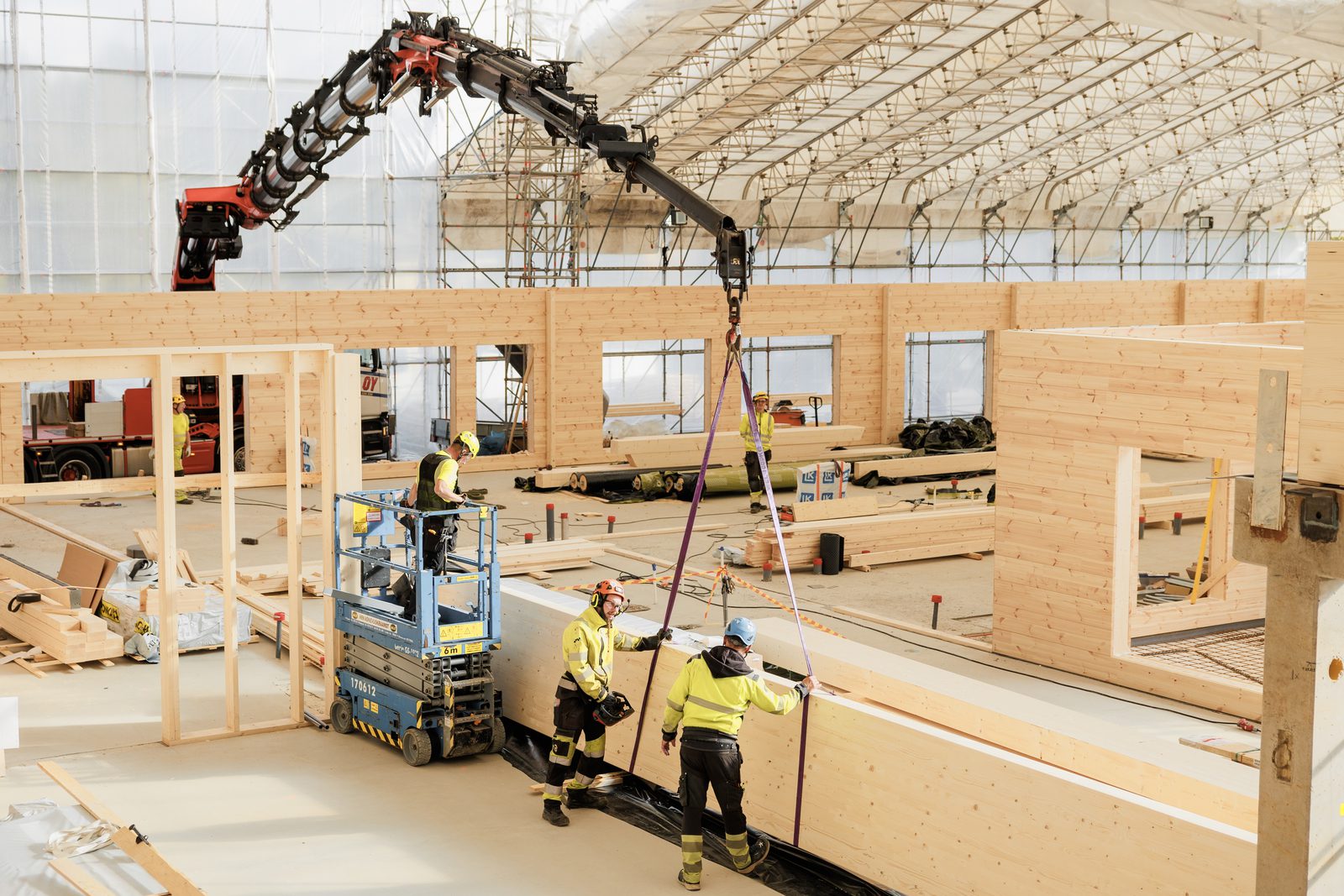
Modern engineered wood products, such as CLT log and hybrid timber structures, make it possible to build apartment buildings, hotels, and large residential areas with high technical performance.
Wood also supports healthy indoor air quality and distinctive architecture. Projects such as Hangon Laituri and Honka’s upcoming CLT log hotel in Tornio show how timber construction can scale successfully into larger urban and hospitality developments.
Why is wood becoming more common in large-scale projects?
Wood is becoming more common in large-scale projects because developers need buildings that combine sustainability, architectural quality, long-term durability, and efficient delivery.
Honka CLT log technology (Fusion+) supports modern design, natural interior surfaces, reduced construction waste, and faster construction compared with traditional settling log technology. The main reasons behind the growing popularity of modern log construction are explained below.
Sustainability supports low-carbon building goals
Wood is a renewable material that stores carbon throughout the building’s lifecycle. This makes it an attractive choice for developers, cities, and investors looking for lower-carbon alternatives to conventional construction. In large-scale projects, material choices can have a major impact on the overall environmental profile of the development.
Responsibly sourced Finnish wood
Honka CLT logs are made from slow-grown Finnish wood. Finland’s forests grow more wood each year than is harvested: according to Luonnonvarakeskus (Luke), annual growth is around 103 million cubic metres while removal stays near 90 million, and growth has exceeded removal every year since the 1970s. This is a concrete reason to order timber elements from Finland: the raw material is genuinely renewable and traceable.
Wood creates distinctive and warm architecture
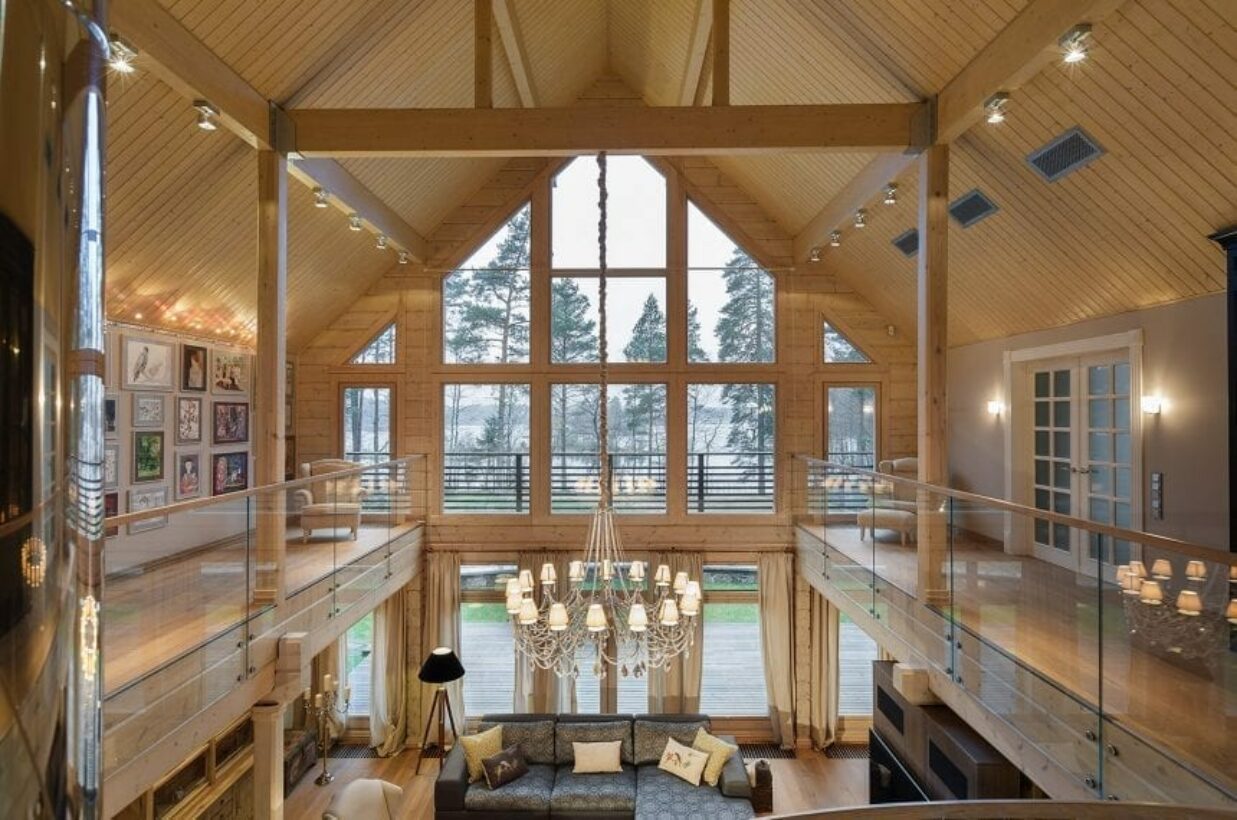
Wood gives large buildings a natural, warm, and recognisable identity. With modern CLT log technology, architects can combine solid wood with glass, stone, steel, and concrete without the visual limitations of traditional log construction. This makes wood suitable for both urban apartment buildings and high-end resort environments.
Natural materials support wellbeing
Wood is often chosen because it creates a calm and comfortable indoor atmosphere. Visible natural wood surfaces can strengthen the connection to nature and support a healthier living or hospitality environment. In residential areas, hotels, and wellness resorts, this can become part of the project’s value proposition.
Technical development makes wood more scalable
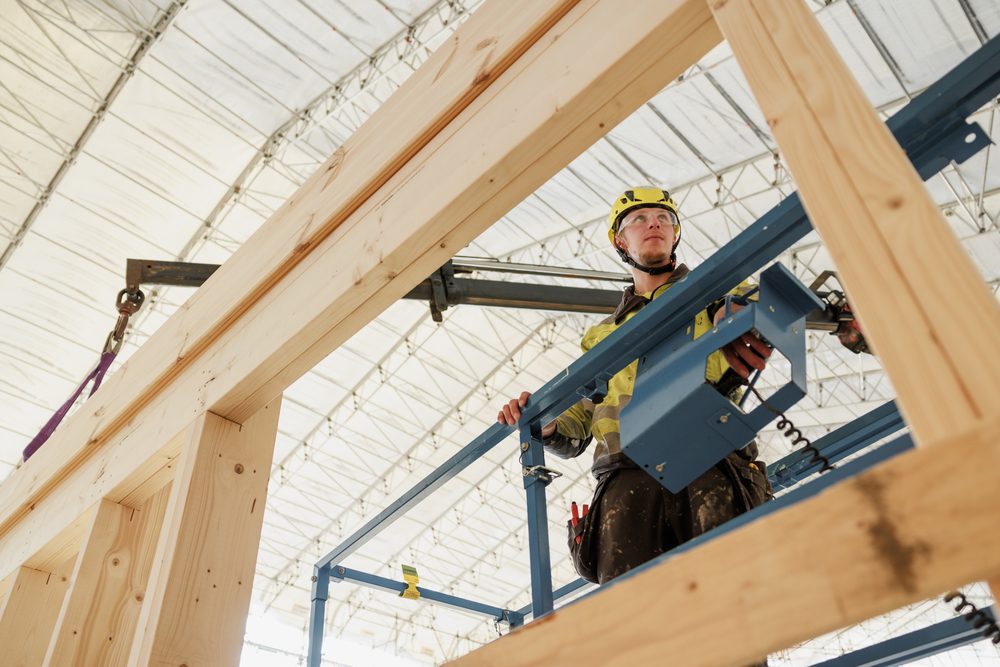
One key reason is technical development. Honka’s CLT logs are non-settling, allow direct fastening of different materials and structures, reduce the need for settling spaces, and make electrical installations easier to hide inside the logs. These features improve design freedom and make log construction more practical for larger projects.

Examples of modern wood area projects
Modern wood area projects can range from hybrid apartment buildings to hotels, resorts, and complete residential neighbourhoods. What connects them is the use of wood as both a technical and architectural material.
Honka’s references show how CLT log and modern log technology can be used in multistorey housing, hospitality projects, and cohesive area developments where buildings share the same natural identity, long-term durability, and connection to the surrounding landscape. Below are some examples of modern wood area projects.
Honka Multistorey and attached house concepts
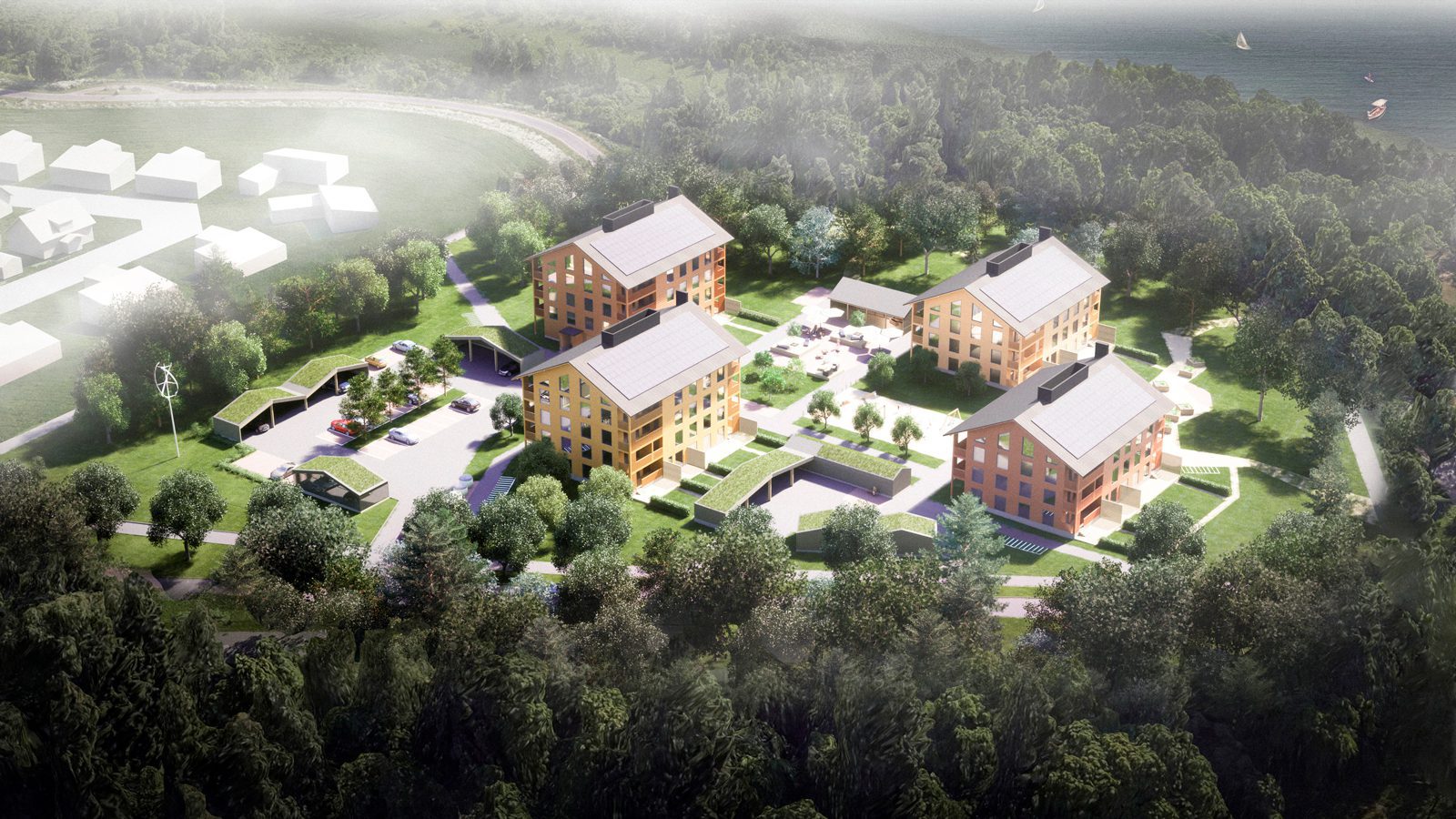
Honka Multistorey is a concept for hybrid apartment buildings where CLT log walls are combined with concrete structures. The aim is to bring the benefits of log construction into safe, long-lasting multistorey housing while supporting predictable construction, climate goals, healthy indoor conditions, and distinctive apartment design. The same logic extends to attached houses, a practical solution for cohesive residential area developments.
Large-scale hospitality and resort projects
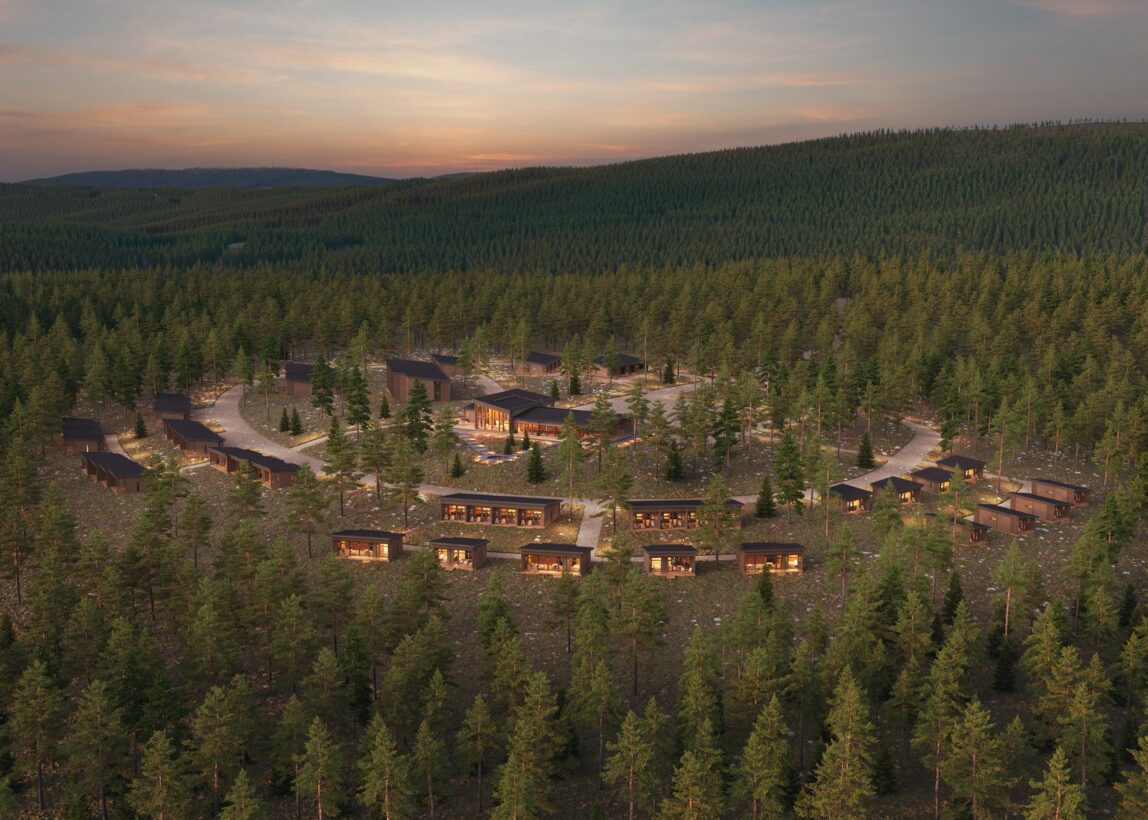
Wood is also becoming more visible in large hospitality projects, especially in nature-based destinations. Honka’s Lapland references include resort design concepts and Finland’s largest upcoming CLT log hotel in Tornio, showing how timber can support memorable guest experiences, scalable accommodation, and a strong connection to local nature.
- Borodyanka Gymnasium
At the ReBuild Ukraine 2025 forum, Honkarakenne signed a memorandum of understanding with the Kyiv Regional Military Administration and the Borodyanka Village Council to support future reconstruction projects in Ukraine. The cooperation highlights how modern Finnish wood construction expertise and scalable CLT log solutions can contribute to sustainable, healthy, and long-lasting residential development in rebuilding communities. - SEOVILLAGE in Latvia
SEOVILLAGE in Latvia is a nature-focused wellness retreat that combines modern Scandinavian design with sustainable wood construction. The project demonstrates how timber architecture can create calming, experience-driven environments that blend naturally into the surrounding landscape. With its emphasis on wellbeing, natural materials, and cohesive area design, SEOVILLAGE reflects the growing demand for modern wood-based hospitality and resort developments.
Scandinavian architecture in residential developments
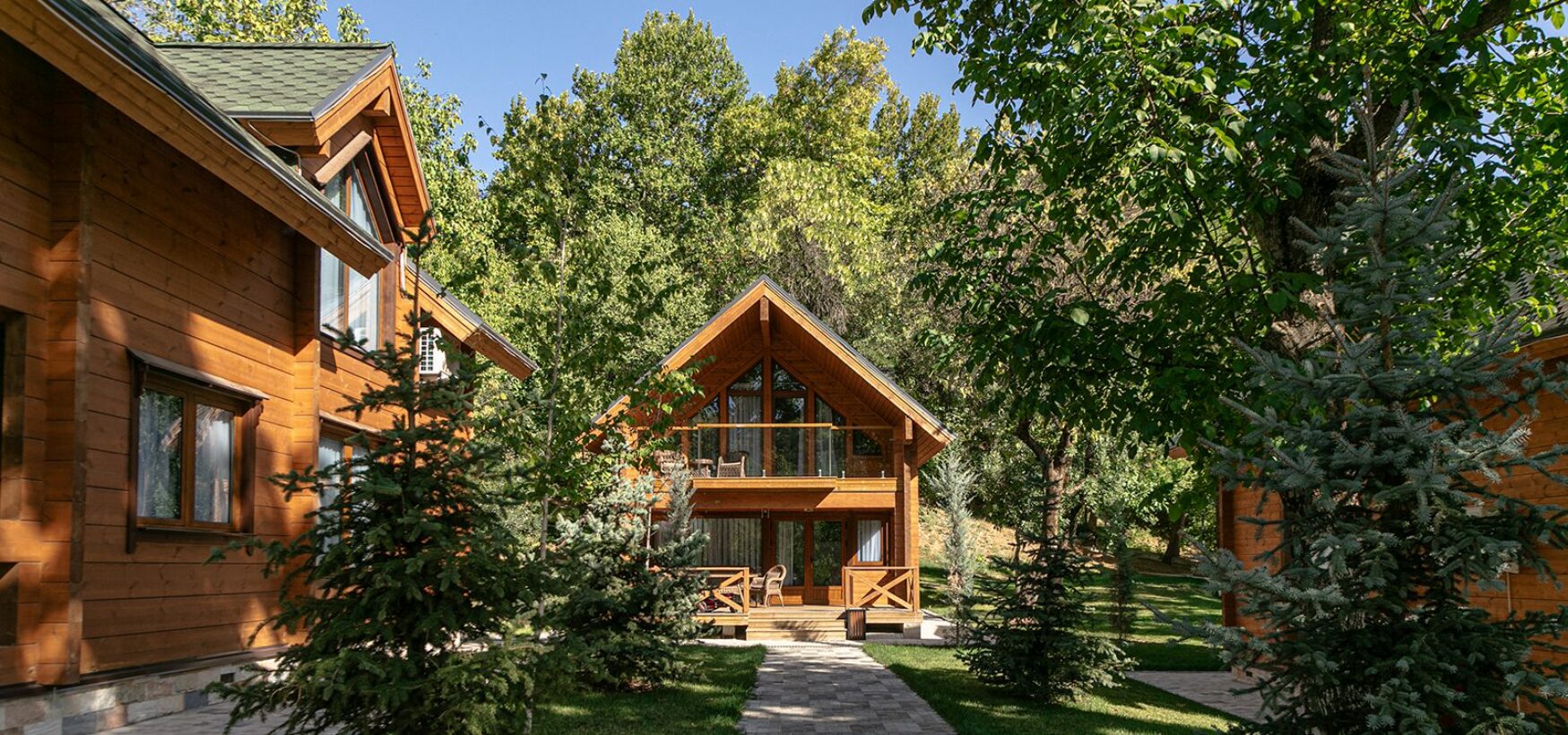
In residential area projects, wood helps create a cohesive Scandinavian architectural identity. When several homes or buildings are designed with the same material language, the area feels unified without becoming repetitive. Honka’s area project approach highlights natural integration, customised design, and modern log technology for residential developments.
What is the future of wood construction in large projects?
The future of wood construction in large projects looks increasingly scalable, technically advanced, and competitive. As CLT and other engineered timber solutions develop, wood can be used more widely in multistorey buildings, hotels, resorts, and area developments. A Theseus thesis on CLT notes that CLT has strong potential as a building material, especially due to its suitability for changing climate conditions and fast installation compared with traditional concrete construction.
How does wood support long-term project value?
Wood supports long-term project value by combining durability, strong visual identity, and growing demand for sustainable living environments. In large developments, natural wood surfaces can make buildings feel warmer, more distinctive, and easier to connect with the surrounding landscape. For developers, this can strengthen both market appeal and long-term usability. When supported by modern CLT log technology, wood also offers technical reliability, design flexibility, and a lasting architectural character that can help projects remain attractive over time.
Summary
Wood is no longer seen only as a traditional building material, but as a modern solution for multistorey buildings, hospitality projects, and large residential developments. Advances in CLT log and hybrid wood construction have made it possible to combine sustainability, technical performance, healthy indoor environments, and distinctive architecture at a larger scale.
As cities, developers, and investors continue to prioritise low-carbon and long-lasting construction, wood is expected to play an increasingly important role in the future of urban and area development.
Sources
Theseus – Pulkkinen Hanna-Liisa – Properties and Use of CLT as a Building Material [in Finnish]
Luonnonvarakeskus (Luke) – Forest Resources 2025: Decline in Tree Growth Has Halted [in Finnish and Swedish]
Honka – Green buildings for healthy and ecological living
Honka – Resort Design in Timber
Honka – Honka to Build Finland’s Largest CLT log Hotel
Honka – Apartment buildings
Honka – Honkarakenne, Kyiv Administration & Borodyanka Sign MoU at Rebuild Ukraine Forum
Honka – The next generation log homes based on CLT technology
Download our latest catalogue
Download our latest catalogue with inspiring examples of well-designed log homes around the world – made of natural wood!