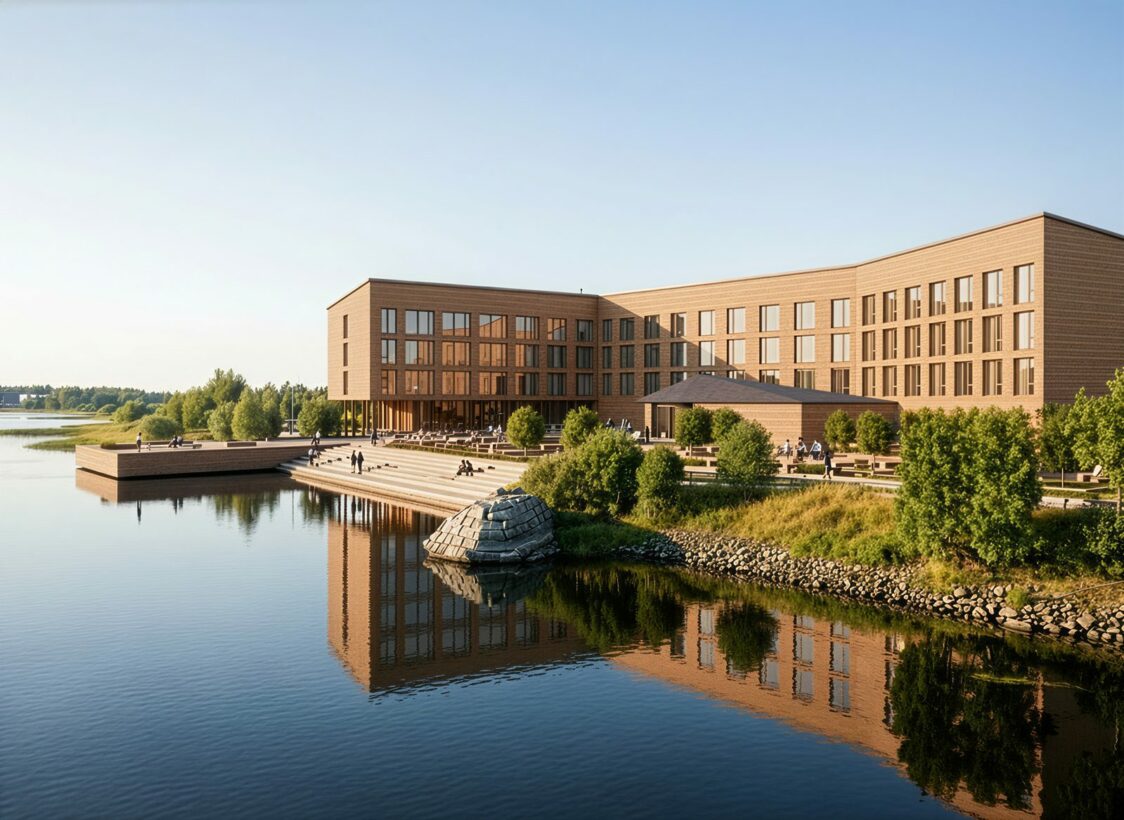
Resort design for high-performing developments requires a holistic and balanced approach that integrates architecture, landscape design and guest experience with long-term operational efficiency, sustainability and asset performance.
This guide presents ten core principles for resort developers, covering the full development lifecycle from concept definition and master planning to material strategy, building placement and partner selection. Each section addresses critical strategic questions related to what, how and why key design decisions directly influence operational performance, lifecycle value and market positioning. The framework supports the creation of high-quality, nature-integrated and future-proof resort assets.
How to Design a Resort? – 10 Best Tips for Developers
- Start with a concept that integrates seamlessly with the natural and built environment.
- Plan spatial hierarchy that supports both guest experience and operational efficiency.
- Optimize building placement according to natural light, wind protection and views.
- Use prefabricated solutions to manage schedules and costs.
- Choose materials that support brand identity and environmental responsibility.
- Design buildings and infrastructure to remain flexible in terms of space use and future capacity needs.
- Pay special attention to sound insulation and privacy.
- Integrate landscape architecture and built environment into a seamless whole.
- Consider energy efficiency and carbon footprint from the beginning.
- Choose partners with experience in resort planning and international construction.
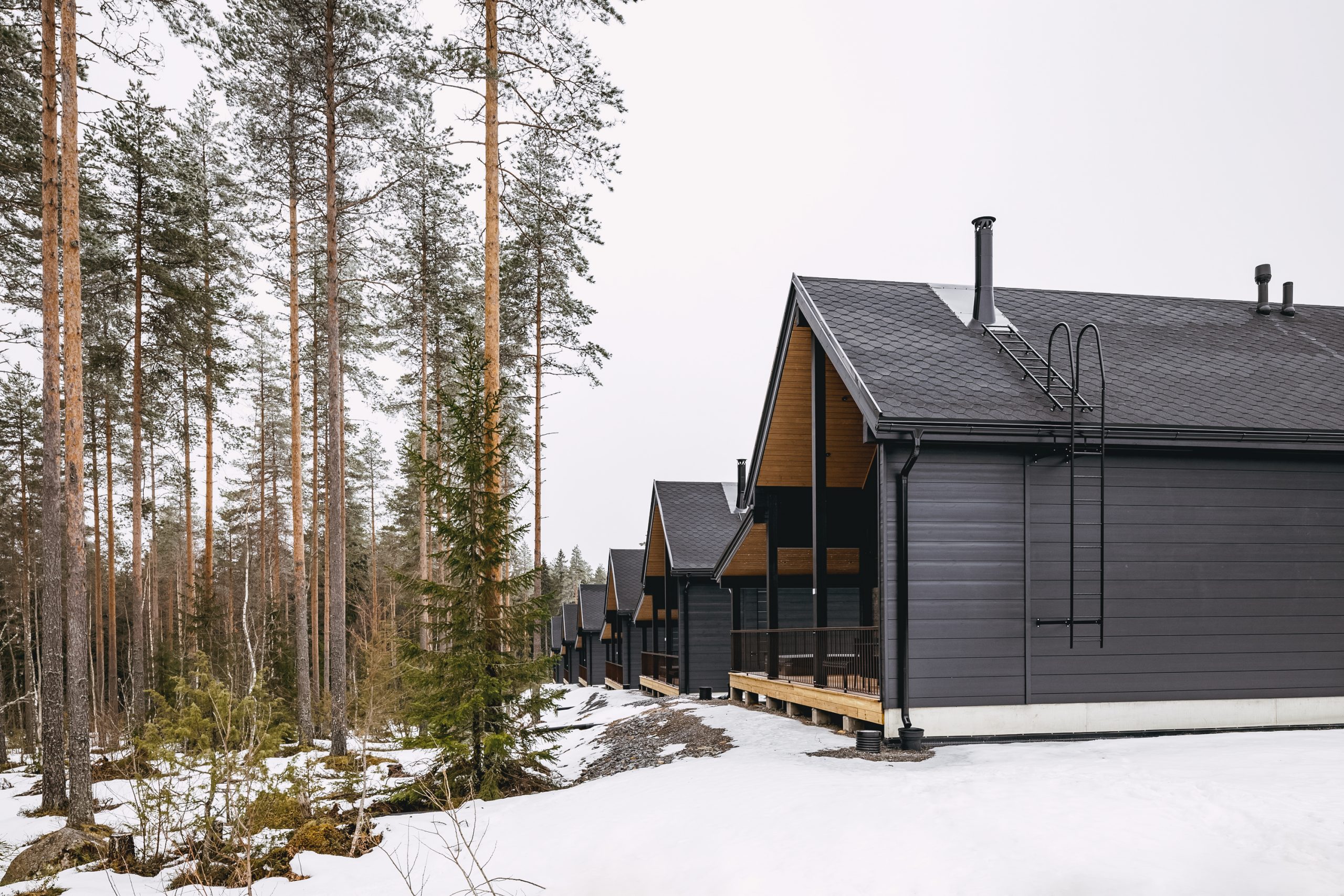
How does the resort concept integrate with its natural and local context?
A successful resort concept is rooted in a thorough site and context analysis. Prior to developing any master plan or architectural scheme, developers should assess landscape characteristics, topography, access, sightlines and climatic conditions, as well as cultural and regional attributes that define the destination identity.
As said in our last article on modern living environments, natural materials contribute significantly to a strong sense of place and long-term user comfort.
”Choosing a timber home or log home represents a return to authentic luxury that values nature, wellbeing and timeless design over excess. Natural wood offers warmth, character and a calming atmosphere that modern materials cannot replicate.”
Honka supports resort developers with a wide range of log-built concepts and solutions for resorts, hotels and holiday lodges. You can explore these approaches in more detail here.
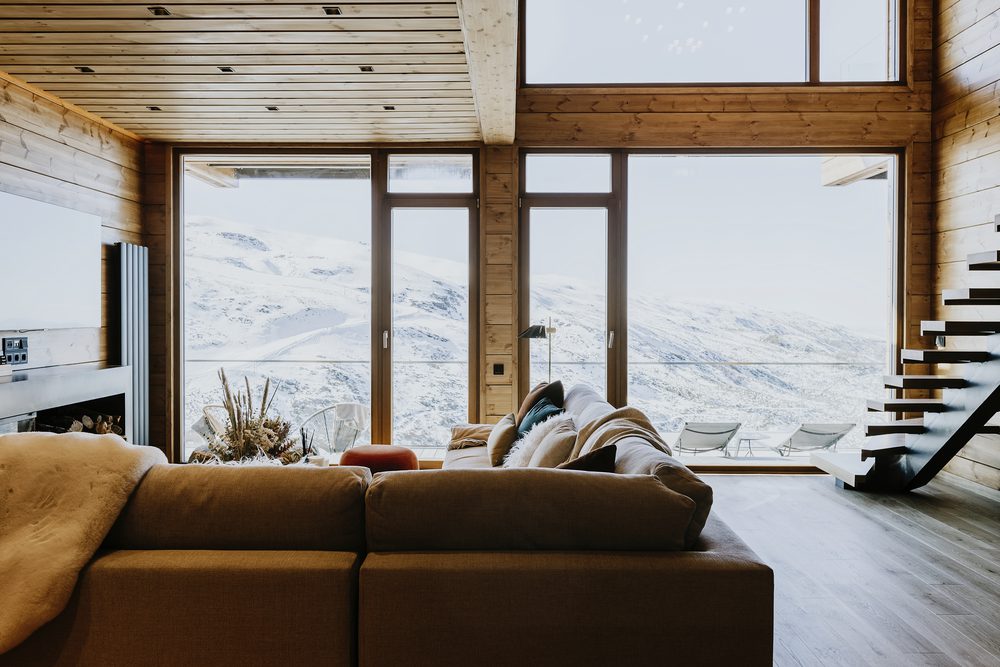
What should a functional resort design plan include?
A functional resort design plan forms the backbone of efficient resort development by aligning guest experience design with operational logistics. This requires a clear understanding of spatial relationships, service flows and back-of-house operations from the earliest planning stages.
A well-structured design plan reduces operational costs, improves service quality and ensures that each functional element supports long-term commercial performance. The following sections outline the core components that define an effective resort development plan.
Zoning and functional structure
A clearly defined zoning strategy organises accommodation, amenities and service areas across the site. Proper zoning prevents conflicts between active and quiet areas, improves wayfinding, and ensures compliance with safety and privacy requirements. Effective zoning results in a coherent layout and optimised operational flow.
Guest and service circulation
Effective circulation planning ensures that guests move naturally through public spaces while staff can access service routes without disruption. Logical pathways, clear arrival sequences and separate back-of-house connections support a seamless experience. Good circulation design reduces bottlenecks, improves accessibility and strengthens the feeling of comfort and quality throughout the resort.
Back-of-house infrastructure
Operational infrastructure – including waste handling, laundry logistics, loading areas, storage and staff facilities – must be strategically located to support daily operations while remaining invisible to guests. Proper planning minimises noise, congestion and service disruptions, preserving a high-end guest environment.
Capacity and facility sizing
Correct sizing of key facilities ensures that the resort functions smoothly during peak and off-peak seasons alike. Reception areas, restaurants, wellness spaces and utilities must be dimensioned to handle varying demand levels without compromising service quality. When capacity planning is done early, the resort remains comfortable, efficient and commercially resilient as guest volumes fluctuate over time.
With extensive experience in international resort development, Honkarakenne Oyj delivers functional, efficient and guest-oriented layouts designed for long-term performance, supported by cost-efficient, curated design concepts, optimised structural systems and intelligent use of raw materials.
Through standardised yet adaptable planning solutions, Honka reduces design and engineering costs, improves constructability and ensures material efficiency without compromising architectural quality, sustainability or brand identity. These integrated design concepts and structural solutions also streamline logistics, shorten on-site construction schedules and reduce the need for heavy equipment and site resources, resulting in predictable delivery, lower execution risk and strong lifecycle value for developers and investors.
You can reach our professional team here.
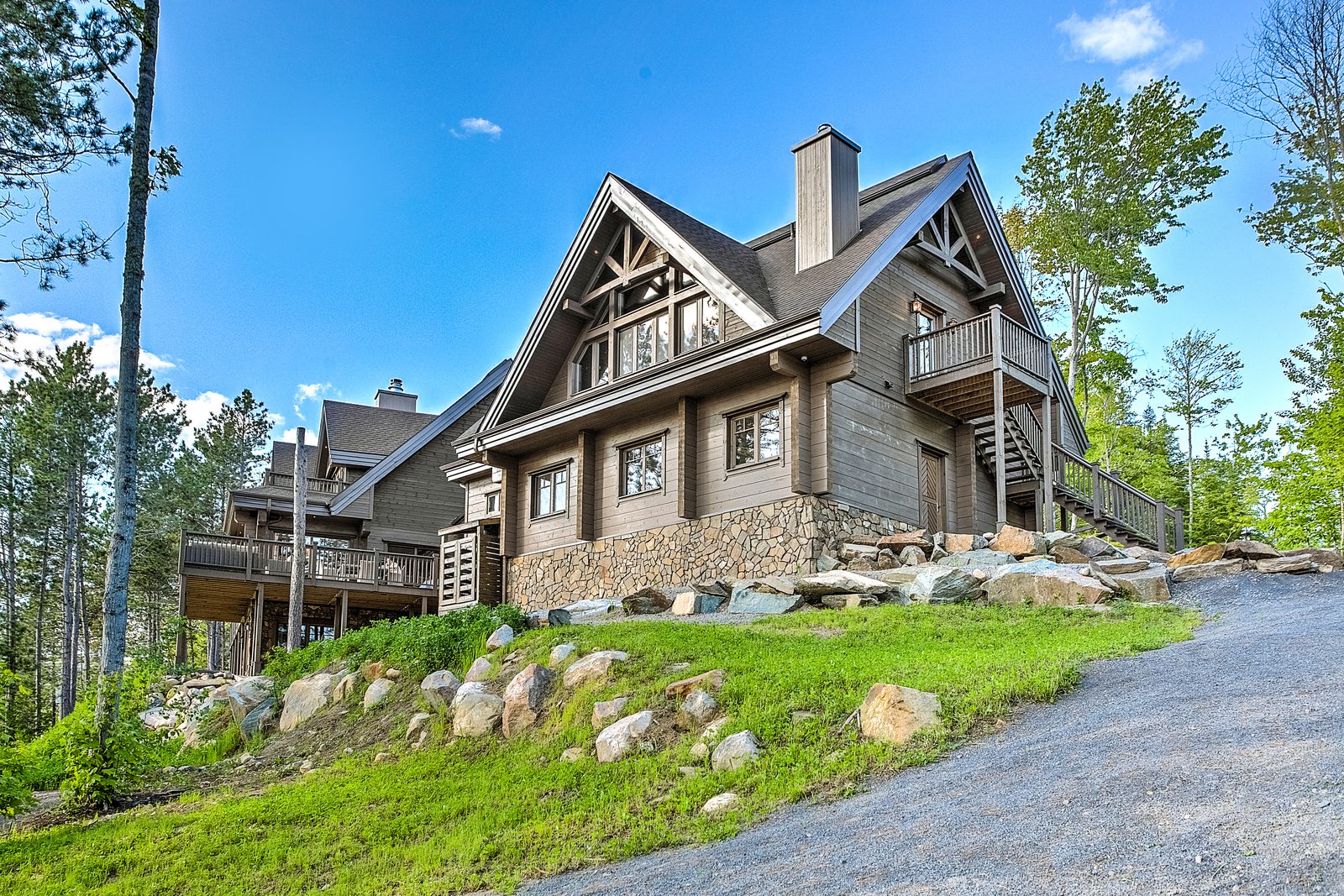
How does strategic building placement improve energy performance, views and comfort?
Strategic building placement allows developers to make full use of natural light, shelter and views, strengthening both comfort and overall efficiency. Proper orientation reduces reliance on mechanical systems and supports stable indoor conditions.
As highlighted in our earlier article Cosy & Luxurious – 10 Tips for Creating the Look on creating inviting and luxurious environments, thoughtful use of light and space plays a key role in guest wellbeing. When these principles guide building placement, they strengthen sustainability and operational performance.

Why prefabricated timber solutions improve efficiency in resort construction?
Prefabricated timber construction offers a reliable way to improve efficiency in resort construction by shortening on-site schedules and reducing cost uncertainty. Factory-controlled production ensures consistent quality while minimising weather-related risks and logistical uncertainty.
These advantages are particularly valuable in remote resort locations where access constraints, labour availability and transport costs present significant challenges.
Prefabrication enables predictable delivery schedules and long-term asset reliability.
Which materials contribute to a sustainable, healthy and high-end resort environment?
Choosing materials that support brand identity, sustainability and guest wellbeing is essential in high-end resort environments. Honka CLT-log and natural materials create a warm, premium atmosphere and offer proven benefits for indoor air quality and comfort.
On our website, we outline the key reasons why log structures are an excellent choice for resort construction:
- Wood is an ecological and low carbon building material.
- Log buildings blend naturally into scenic landscapes.
- Wood enables the creation of inviting, homelike and relaxing spaces.
- Solid wood is a proven safe and healthy building material.
- Projects can be completed quickly with the chosen delivery method.
- Honka is an industry leader whose certified solutions stand the test of time and retain their value.
How can resort buildings be designed for long-term flexibility?
Designing resort buildings with long-term adaptability in mind makes it easier to respond to seasonal demand, shifting travel trends and evolving guest expectations.
Timber structures support flexible layouts, phased development and future capacity expansion. Technical systems can be designed for scalability, reducing the need for major structural interventions. Early integration of flexibility ensures commercial resilience and sustainable growth.
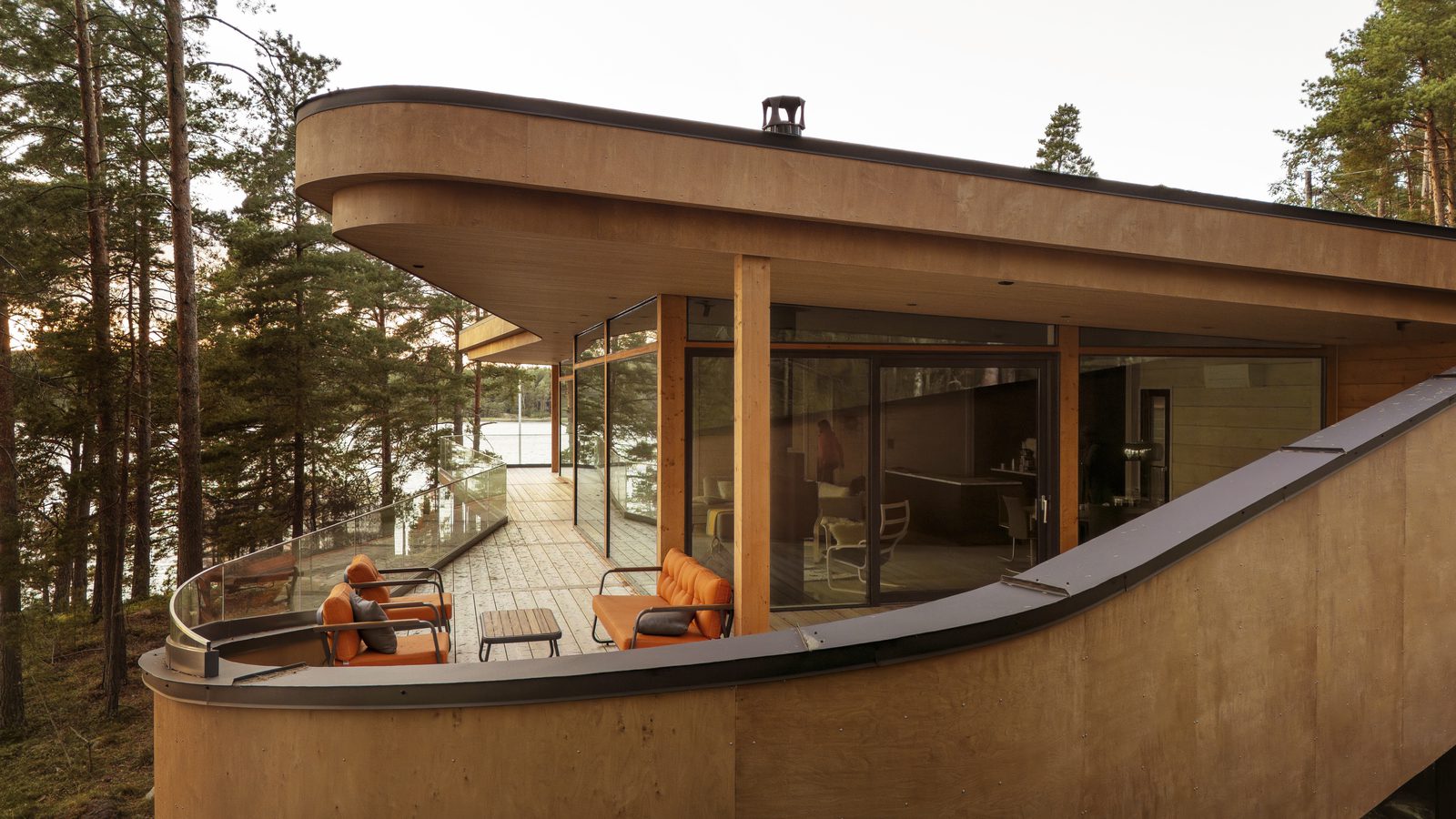
What architectural and acoustic solutions help ensure privacy and a premium guest experience?
Privacy is a core quality driver in resort development. Building spacing, orientation and internal layouts must minimise visual and acoustic disturbance.
Solid timber structures provide inherent acoustic damping, contributing to calm, private and comfortable environments. When privacy is embedded at the design stage, the resort delivers a consistently premium guest experience.
How should landscape architecture support identity and operations?
Landscape architecture is integral to both brand identity and functional performance. Coherent outdoor spaces – paths, terraces, parks and water features – reinforce the concept while guiding guest movement intuitively.
Clear circulation routes, well placed service access and balanced zoning between quiet and active areas ensure smooth operations and enhance the overall experience, strengthening both comfort and commercial value.
Why must energy and carbon performance be addressed early?
Early-stage integration of energy efficiency and carbon performance is essential for environmental responsibility and long-term economic competitiveness.
Passive design strategies, e.g. renewable energy solar systems and timber’s carbon storage capacity reduce operating costs and enhance sustainability credentials. Early design decisions have a decisive impact on lifecycle performance, guest comfort and asset value.
As demonstrated in our earlier case project in the Sierra Nevada, early-stage decisions greatly affect performance and guest comfort. Choosing ecological building materials and designing with the principles of an eco lodge can provide a strong competitive advantage and support long term value creation.

How do you select partners with proven expertise in resort planning and international timber construction?
Partner selection is a critical value driver in resort development and has a direct impact on risk profile, delivery certainty, lifecycle performance and asset value.
Experienced partners such as architects, structural engineers, timber specialists and construction teams ensure that the concept, technical solutions and execution strategy are aligned from the earliest stages. This alignment reduces design iterations, minimises technical risk and improves cost and schedule predictability throughout the project lifecycle.
In international resort developments, partner competence becomes even more critical. Projects must comply with local building regulations, fire and acoustic requirements, climatic conditions, logistics constraints and cultural expectations, often simultaneously. Proven international experience ensures that these factors are addressed, reducing approval risks and execution delays.
Added value for developers and investors
Selecting the right partners delivers tangible and measurable benefits, including the following:
- Reduced development and delivery risk through proven technical and regulatory expertise.
- Improved cost and schedule certainty through coordinated design and prefabrication-driven workflows.
- Higher construction quality and consistency, particularly in demanding or remote locations.
- Optimised lifecycle performance, including durability, energy efficiency and maintenance costs.
- Stronger asset positioning that supports long-term value retention and exit potential.
Honka as a strategic development partner
Honkarakenne Oyj is a trusted partner for resort developers worldwide, with decades of experience in the design and delivery of high-quality log and timber buildings for demanding climates and premium resort environments.
Honka supports developers across the full development value chain – from concept development and master planning support to engineering coordination, prefabricated delivery and on-site execution. This integrated approach ensures consistent quality, efficient collaboration and predictable outcomes, making Honka a reliable partner for international resort projects where performance, sustainability and long-term value are critical.
Below are a few examples of Honka’s international resort projects that demonstrate our capability in creating sustainable, nature-integrated destinations.
Resort Design Idea – Arttysur Lux Village, Sierra Nevada, Spain
Nestled in the majestic Sierra Nevada—the highest mountain range in southern Spain—Arttysur Lux Village is an exclusive, log-built eco‑resort comprising 15 holiday homes and two five‑star hotels. Honka was selected as the construction partner for this remarkable ski destination thanks to its premium design, commitment to sustainable natural wood, and exceptional precision in delivery.

Resort Design Idea – Green Hills Resort, Central Asia, Uzbekistan
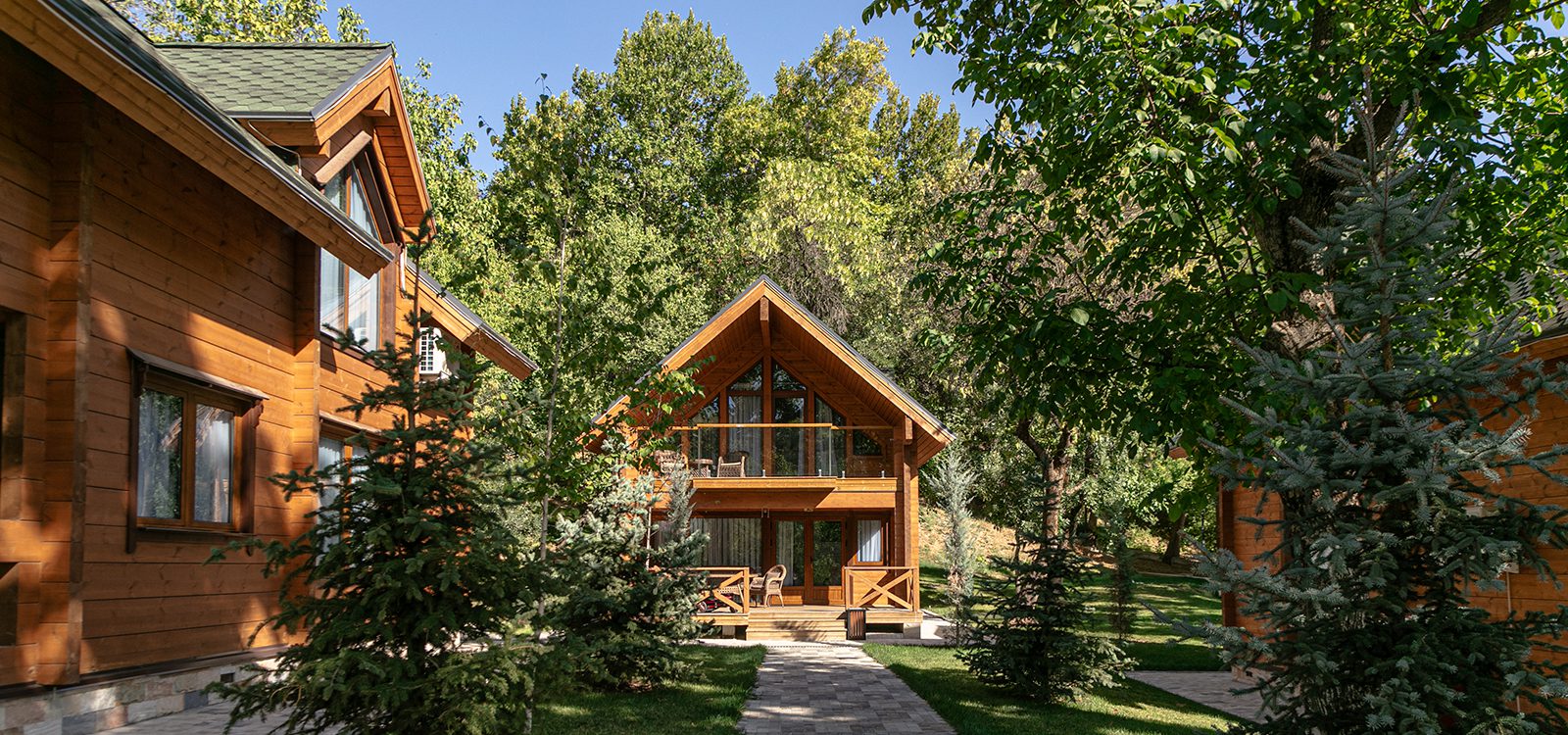
Green Hills Resort is a unique, eco-friendly holiday destination for spending quality time in a beautiful mountain environment as well as enjoying fresh air, tasty restaurant dishes and leisurely days. The resort is located in the Aktash mountains in Central Asia, about 60 kilometres from the Uzbek capital of Taškent and about 4,600 kilometres from Honka’s factory in Karstula, Finland.
Resort Design Idea – Kide Lodges, Finnish Lapland
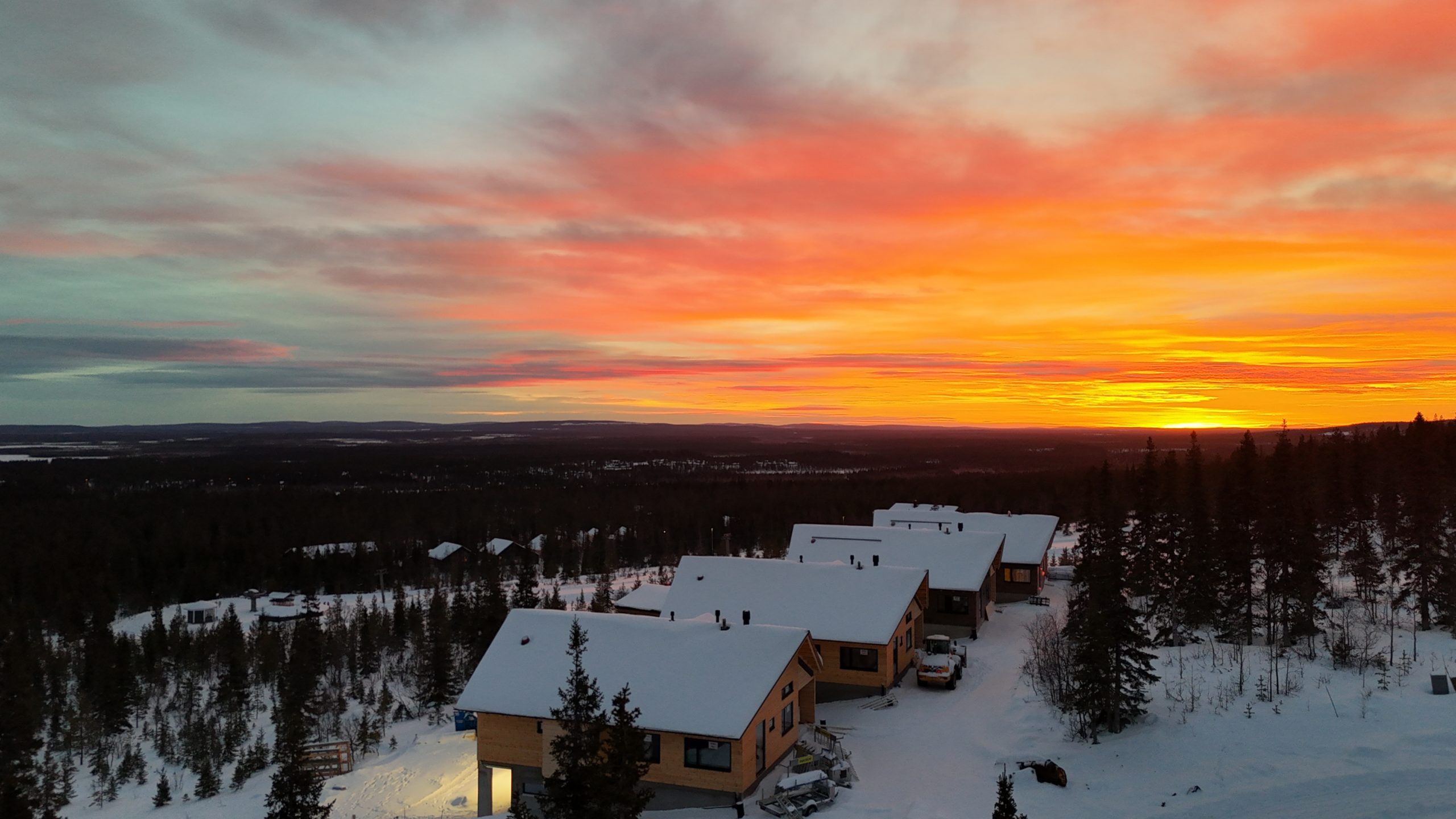
In the heart of the most beautiful Finnish Lapland, a resort of luxury rental lodges is being built from natural, Finnish Honkarakenne logs. Kide Lodges resort was born out of a love for Lapland and high-quality construction. A clear vision combined with solid expertise in regional construction creates a sustainable and responsible tourism infrastructure to meet international demand.
Resort Design Idea – The Lodge, Swiss Alps
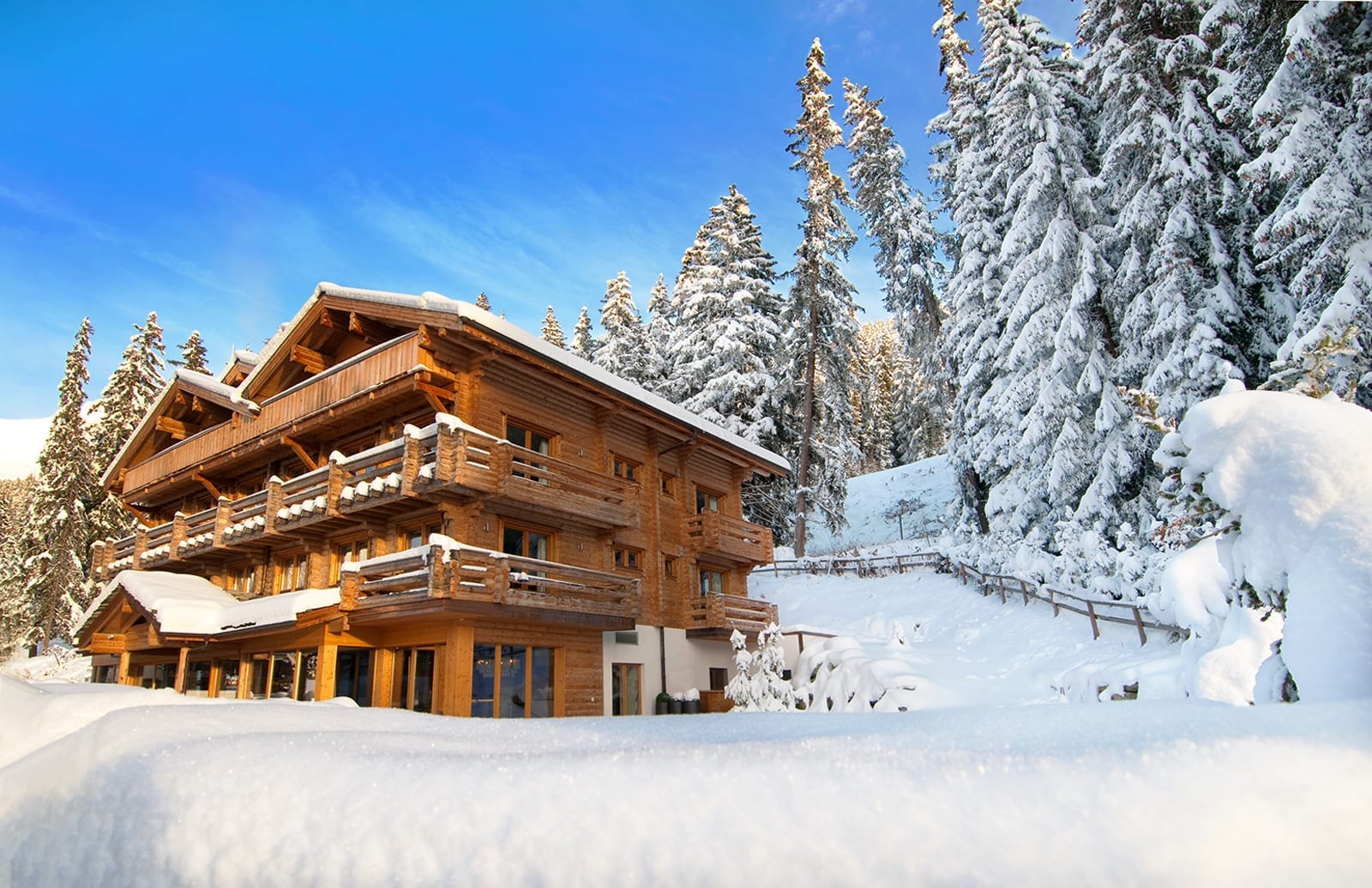
The Lodge exudes unique charm and atmosphere and it is included in the CNN’s list “10 of the world’s most beautiful ski lodges“. The three-floor classic round-log building is set on a pristine location, only 250 metres from the ski lifts.
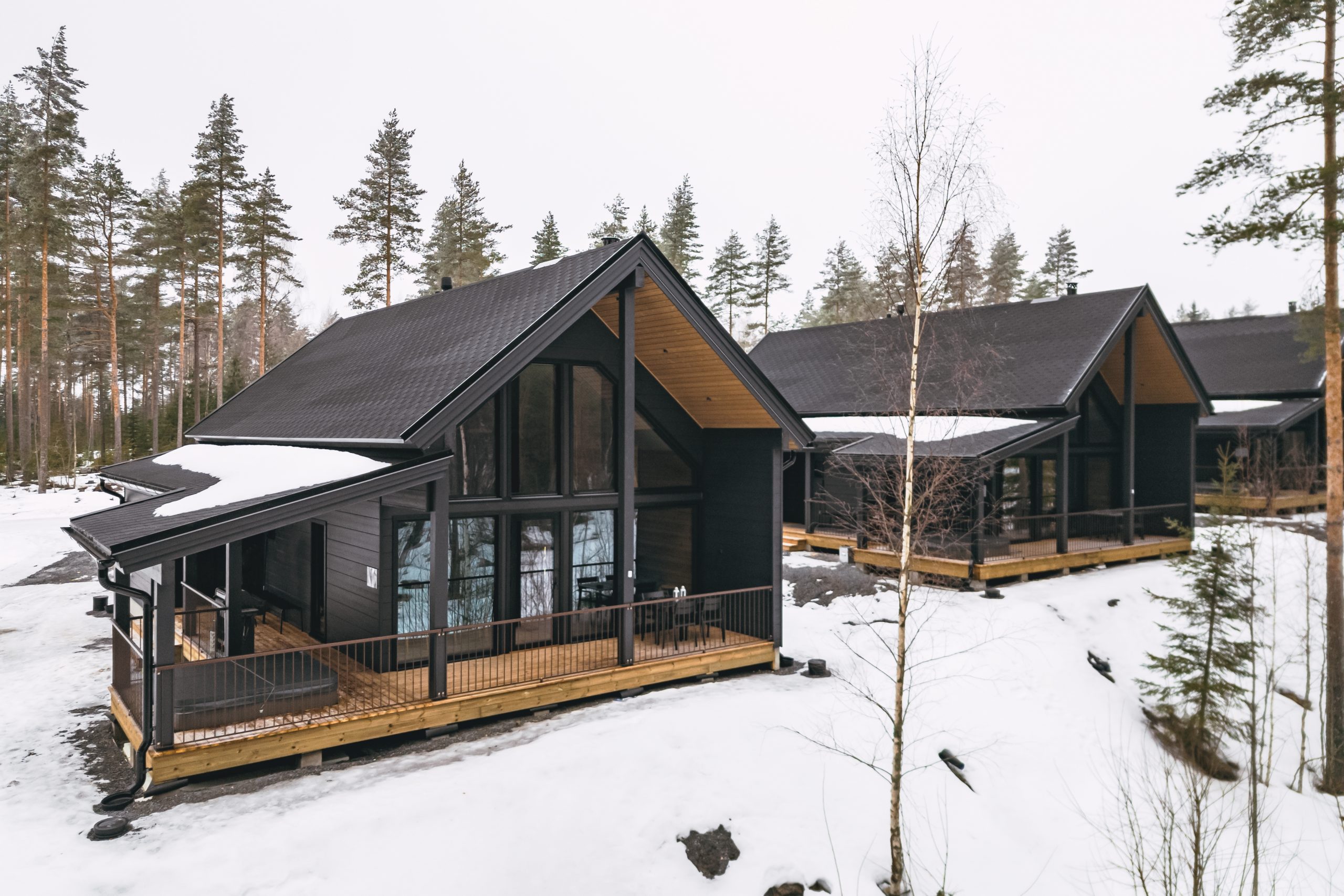
Resort Design Idea – Sappee Resort, Finland
A dream log‑cabin holiday village has been developed at the top of the slopes of Sappee Resort, offering effortless access to nearby services. The first premium Honka log cabins opened in early 2025, and the area allows for up to 20 additional building plots within the existing municipal infrastructure.
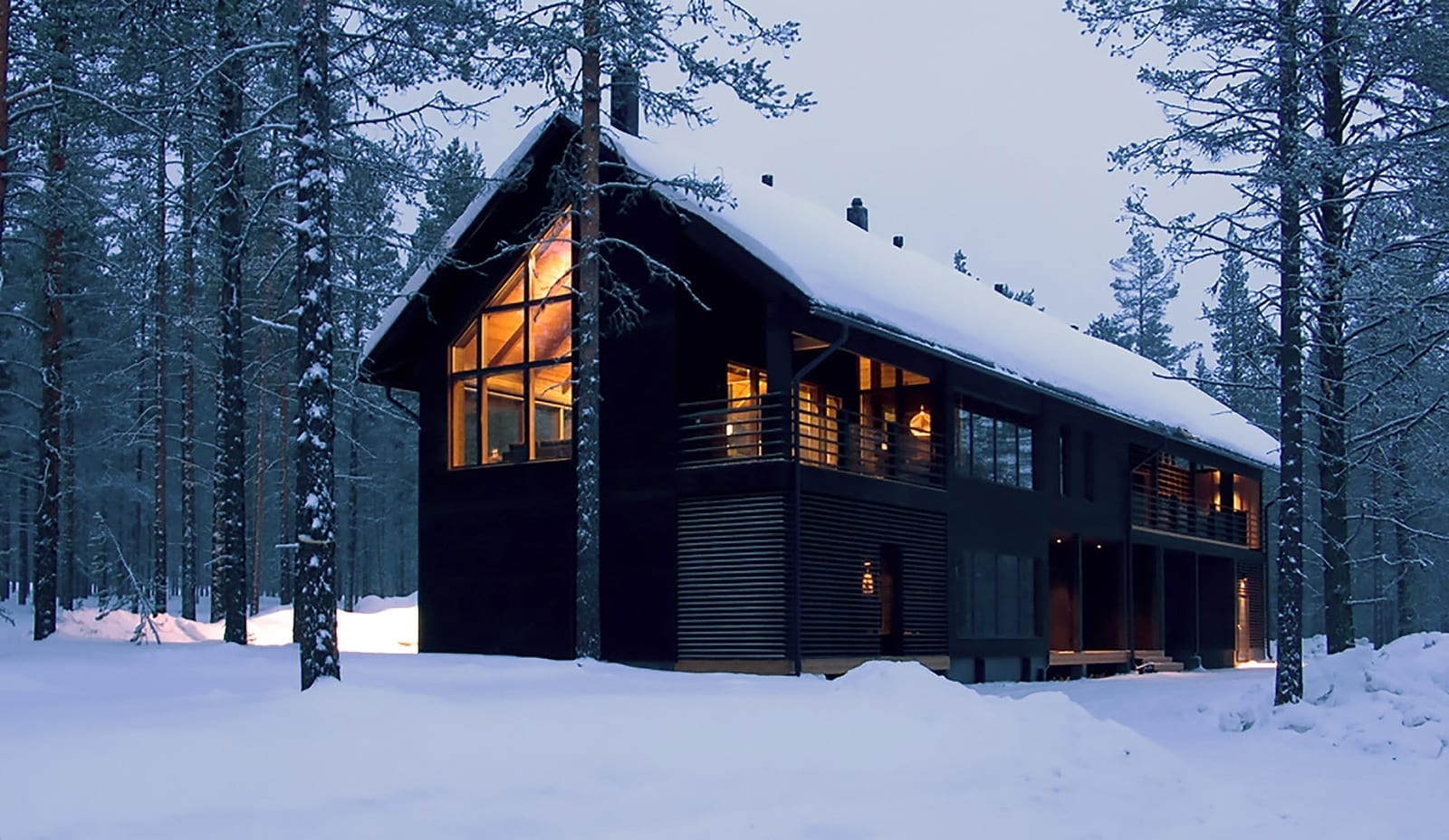
Resort Design Idea – Levi Spirit Villas, Finland
The Levi Spirit was selected as one of the Top 20 winter vacation destinations in the world by Time Magazine and of the 25 most romantic hotels in Europe by Elle Magazine.
Sources
Honka – Cosy & Luxurious – 10 Tips for Creating the Look
Honka – Luxury Homes & Modern Living
Honka – A Contemporary Eco-Resort Arttysur Lux Village, Sierra Nevada
Honka – The Easy Way to Build an Eco Hotel
CNN – 10 of the World’s Most Beautiful Ski Lodges
Honka – Premium Villas: High-End Log Villas in Vierumäki, Finland
Honka – Kide Lodges, Finnish Lapland
Resort Design Manual – Download now!
Honka’s sustainable and reliable brand supports the marketing and sales of sites. Discover the Pineo collection and contact our project sales professionals to discuss cooperation opportunities further!

- Honka Pineo ensures both fast offers and an attractive customer experience.
- Honka Pineo is the answer to modern accommodation construction, combining ecology with high profit potential.
- With Honka Pineo, it is easy to build sustainable and value-retaining resorts, made from nature’s best materials.
- Choose an efficient and scalable solution for modern, experiential travel.